
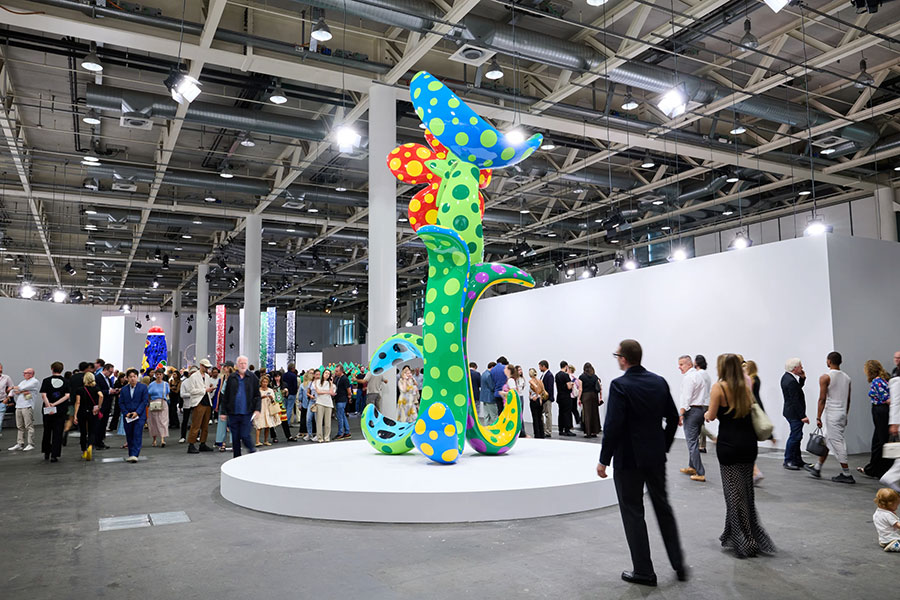
Art Basel 2026 did not reveal a weaker market. It revealed a more selective one.
After several slow years, the art market is moving again. According to the Art Basel & UBS Global Art Market Report 2026, global art sales rose 4% in 2025 to $59.6 billion, confirming a recovery that could be felt throughout the fair. Basel closed with 90,000 visitors and 290 galleries from 43 countries, reaffirming its place as one of the central meeting points of the global art world.
But the real story was not simply that collectors are buying again. It was how they are buying.
The mood at Basel did not feel careless or frantic. Dealers reported strong engagement, collectors were present, and major works moved, but the energy felt more disciplined than euphoric. The strongest demand gathered around works with weight: Picasso at $35 million, Richter at $20 million, Hockney at $8.5 million only weeks after his passing, and a de Kooning placed by Gagosian in the high seven figures within the first hour of the fair.
These sales made headlines, but the numbers alone are not the point. What matters is what they suggest. Collectors were not simply chasing what felt new or loud. They were moving toward artists and works with established relevance, institutional recognition, and a reason to endure.
That same shift appeared in one of the week’s clearest signals: the continued strength of women artists whose markets are still catching up to their historical importance. Helen Frankenthaler, Joan Mitchell, Lynne Drexler, and Lynda Benglis were among the names that stood out throughout the fair. Their presence felt less like a trend and more like a long-overdue correction, one that has been building across museums, collections, scholarship, and now the market itself.
Basel also understood something about presence. This year, the fair introduced Basel Exclusive, a new initiative asking participating galleries to hold back selected major works from digital previews and reveal them only once the fair opened. More than 190 galleries took part, reserving important works for the in-person encounter rather than releasing everything before the event.
In a fair increasingly shaped by previews and early access, Basel Exclusive brought attention back to the moment of encounter. It made the physical experience of seeing a work feel relevant again.
That may be the larger lesson from Art Basel 2026. The market is active again, but not blindly. It is not rewarding noise the way it once did. It is moving toward works with history, context, and a reason to last.
This does not mean speculation has disappeared. But the center of gravity feels different. The strongest works at Basel were not just expensive; they carried cultural weight. They had a place in a larger conversation. They could survive beyond the urgency of the week.
Art Basel 2026 did not simply show that the market is back. It showed that value is becoming harder to fake.