The Geometry of Latin America
From Bogotá to Miami, geometric abstraction is having its moment again, and collectors are paying attention.

Carlos Cruz-Diez, Doble Fisicromía, Plaza Venezuela, Caracas. Photo: Jeragox, Wikimedia Commons, CC BY-SA 3.0.
At ARTBO, Bogotá’s international art fair, which closed on September 27, one of the most telling sales was also one of the quietest. Jorge M. Pérez’s Related Group, one of the defining collectors of Latin American art in Miami, acquired twelve small geometric abstract paintings by the Colombian artist Gustavo Niño. In the same fair, a solo presentation honored Fanny Sanín, whose rigorous, luminous geometries have been built over more than five decades.
Neither gesture was loud. Together, they point to something that collectors, curators and museums have been circling for several years: the return of geometric abstraction as one of the great languages of Latin American art.
A language with a long history
Latin America did not borrow abstraction; it reinvented it. In the decades after the Second World War, artists from Caracas to São Paulo to Havana built a modernism of their own, made of planes, color and structure. In Cuba, Pedro de Oraá co-founded Los Diez Pintores Concretos in the late 1950s, a group devoted to concrete art at a moment of enormous political change. His paintings, now in collections including the Museum of Modern Art in New York, treat geometry not as decoration but as architecture.
Fanny Sanín, born in Bogotá and based in New York for more than half a century, received her first institutional survey in the city only in 2025, at the Americas Society. Recognition has been slow for many of these artists, particularly the women among them. That is precisely why the market is now paying closer attention.
From the canvas into space
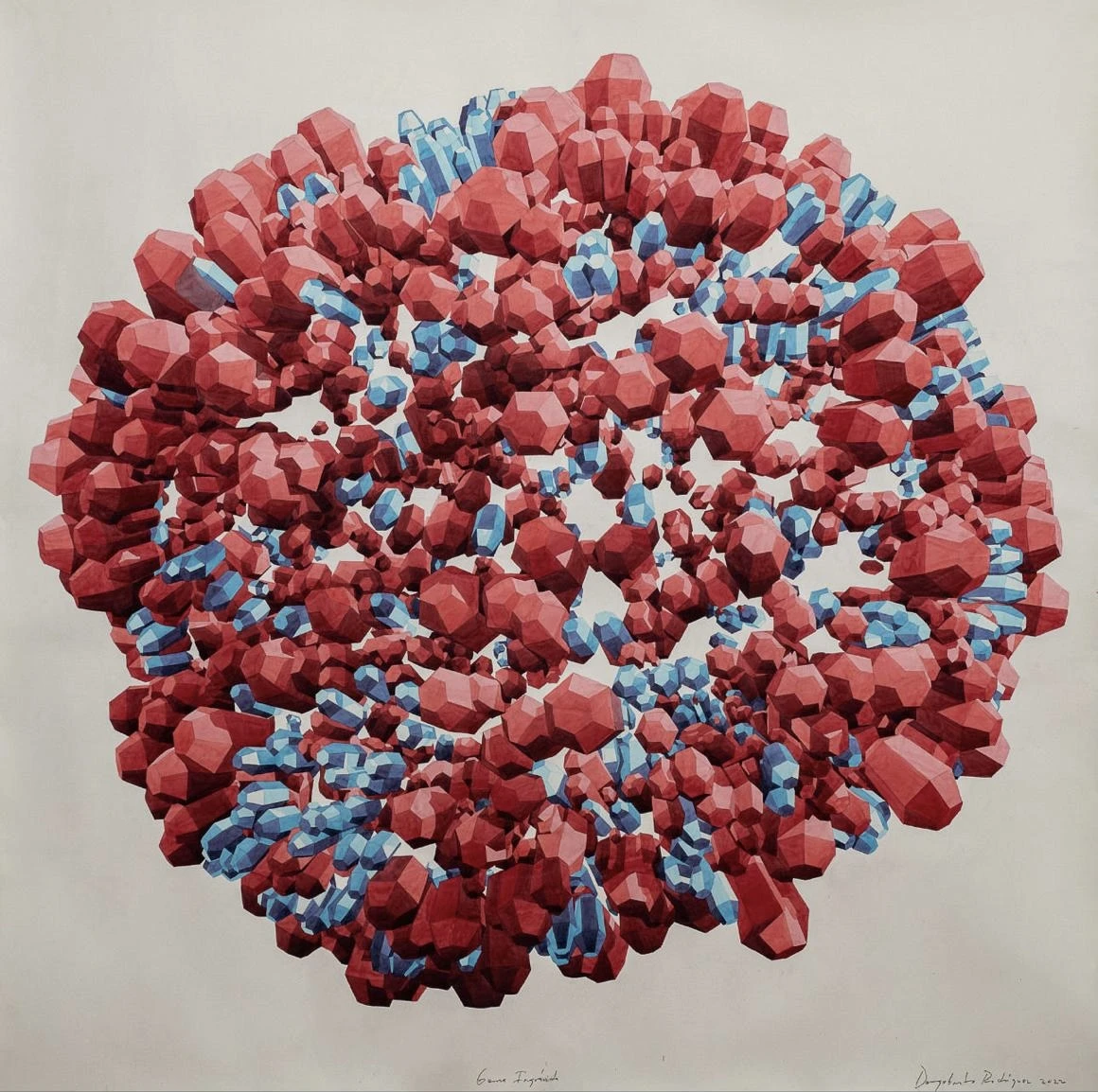
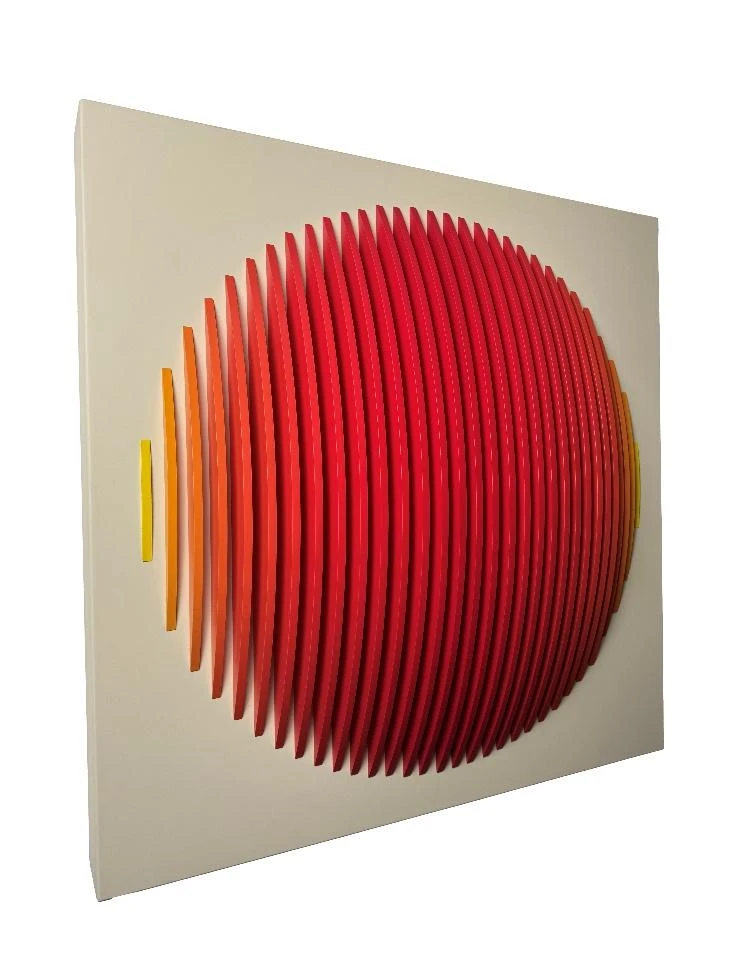
What makes the tradition so alive today is how far its younger heirs have taken it. Los Carpinteros, the Havana collective founded in 1992, drew impossible architectures in watercolor: reading rooms made of interlocking domes, crystalline columns of basalt. Dagoberto Rodríguez, one of its founders, continues to build suspended forms out of hundreds of painted prisms. In Bogotá, Danny Esquenazi, trained in architecture and industrial design, turns lacquered wood into kinetic spheres that seem to shift as the viewer moves.

.jpg?width=1600)
These works share a conviction with the concrete painters who came before them: that structure can carry emotion, and that a well-built form can say as much as an image. It is a language that crosses generations, and one that reads naturally in Miami, a city where so many of these histories meet.

Why Miami
Miami’s relationship with Latin American art is not new, but it is deepening. The city’s major collectors have long championed the region’s modernists, and this December Art Basel Miami Beach will again feature galleries from São Paulo, Mexico City, Buenos Aires, Punta del Este and Havana. Brazil alone is the fair’s third-largest national presence.
For collectors, geometric abstraction offers something rare in today’s market: historical depth, institutional recognition that is still catching up, and works that hold up to a lifetime of looking. The return of geometry is not a trend. It is a correction, and it is happening one carefully chosen work at a time.
